
Egg prices swing so much at the store that “maybe we should get chickens” starts sounding reasonable. Then the hens arrive, and a much less fun question shows up: are these eggs actually cheaper than the ones I was buying? Most of us have no idea. We know what the feed bag cost. We do not know what a dozen eggs costs us, and guessing is not a plan.
Here is the honest part: I am not a chicken expert and I am not going to write like one. I’m the spreadsheet person. What I can do is hand you a chicken egg tracker that turns a pile of feed receipts into one number you can actually use. Every chicken fact below comes from university extension programs, linked so you can check me. The tool itself is mine.
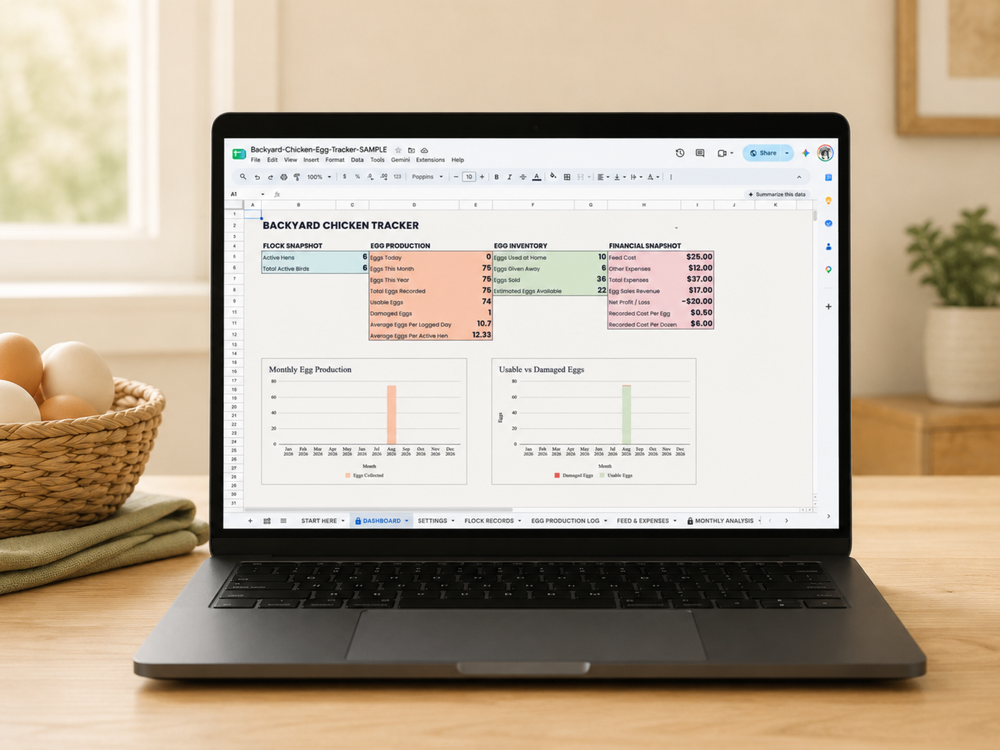
Why a chicken egg tracker earns its 30 seconds a day
A backyard flock is a small business that never sends you an invoice. Feed, bedding, electricity, cartons, chicks, the coop itself. None of it lands in one place, so the cost of an egg stays invisible.
University of Maryland Extension built a small-flock budget that makes the math visible. Their example: 10 hens over a three-year production period, 895 laying days, a 70% daily yield, and a feed conversion of about 4.5 pounds of feed per dozen eggs. Total cost came out to $3.37 per dozen, and that figure does not include labor. They also note startup costs of several hundred to over a thousand dollars, depending on the coop and how much you build yourself.
That is the whole reason this tracker exists. Once your own numbers are written down, you stop arguing with your gut about whether the hens pay for themselves. You can also price eggs for neighbors with a real number instead of a vibe.
What’s inside the chicken egg tracker
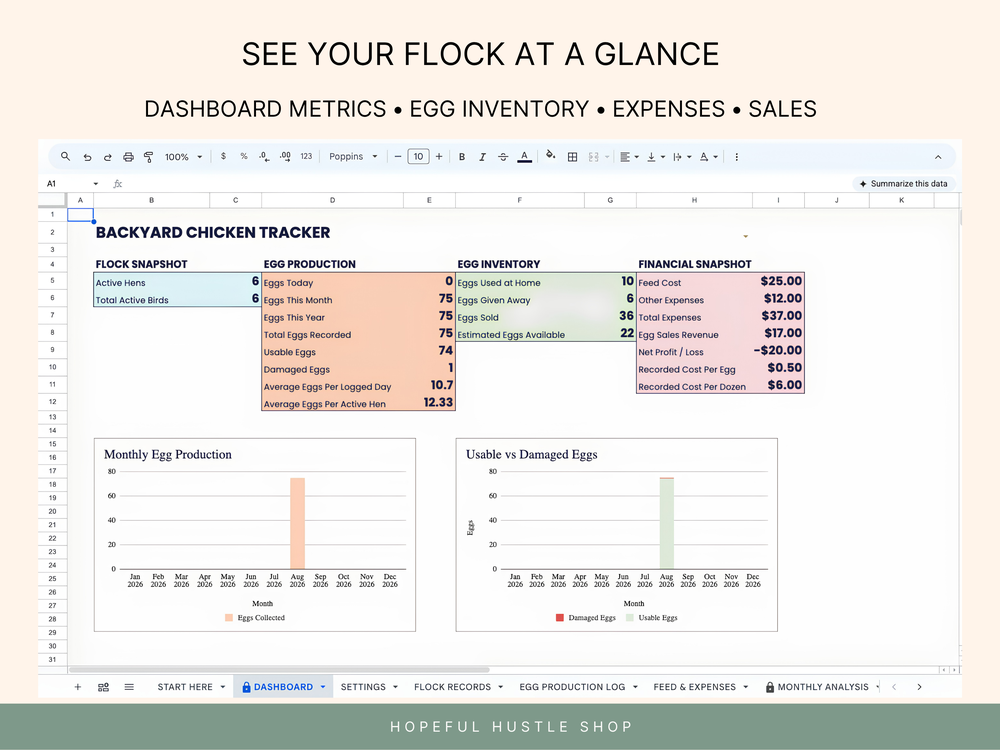
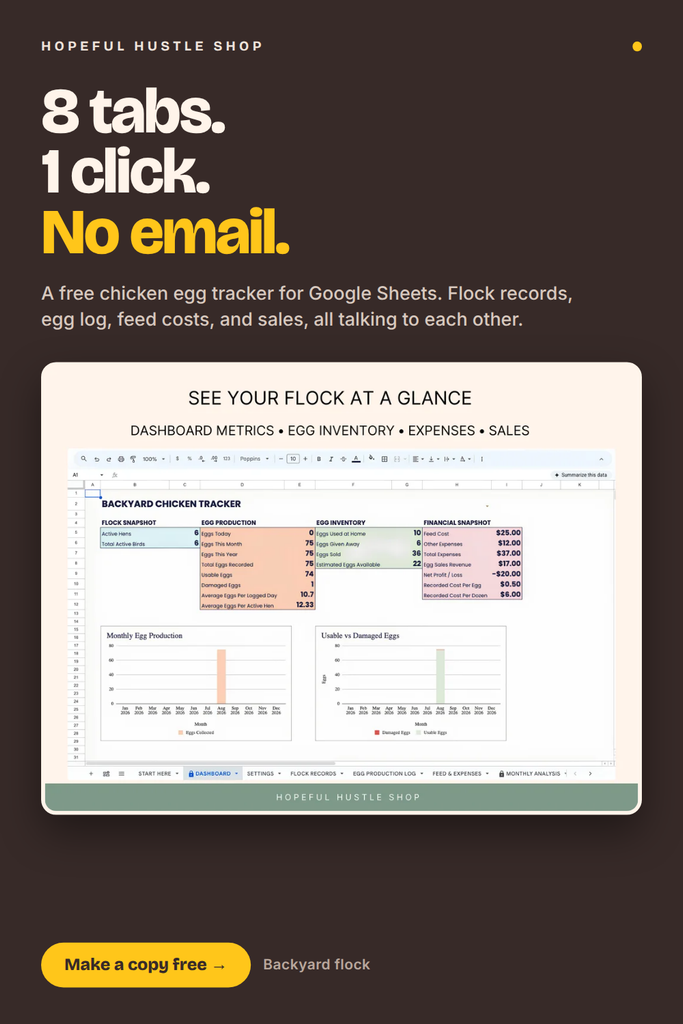
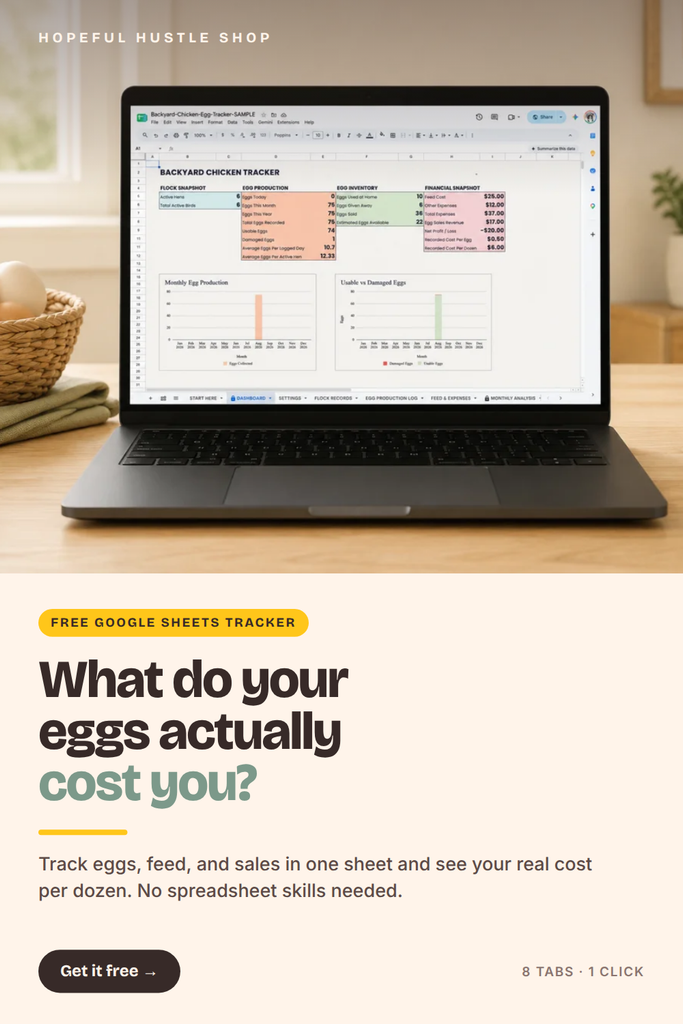
It is a Google Sheets file with eight tabs, and they talk to each other:
- START HERE – the setup order, plus a reminder not to type over formula cells.
- SETTINGS – your farm details, reporting year, and the dropdown lists the other tabs pull from.
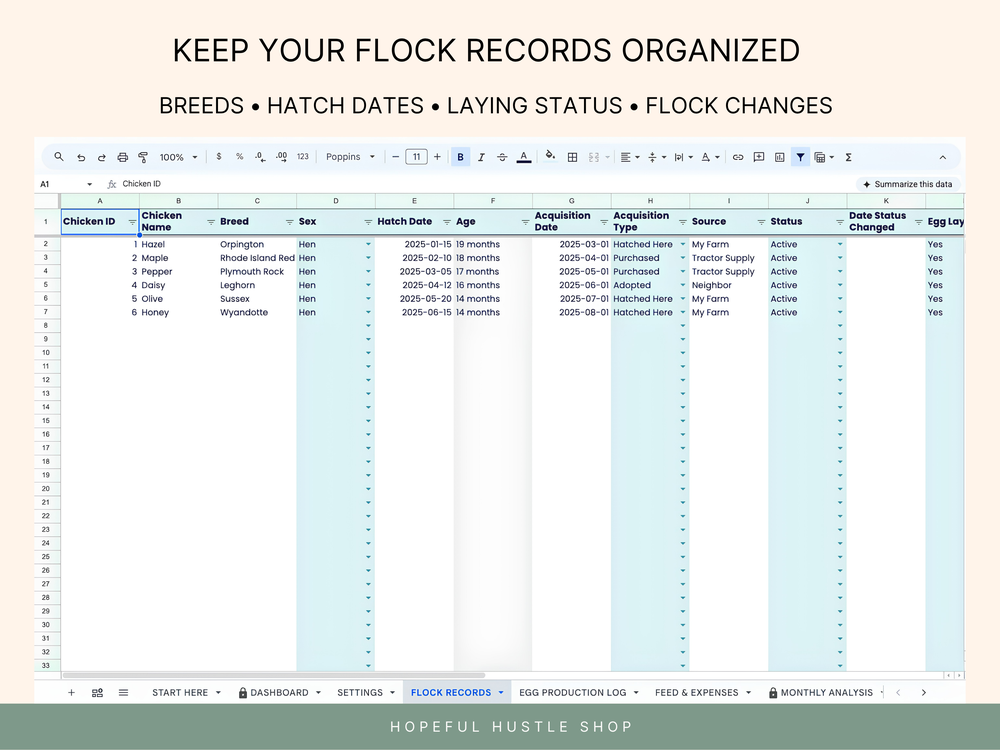
- FLOCK RECORDS – every bird, breed, hatch date, and status (active, retired, sold), with a date field for status changes so your history stays accurate.
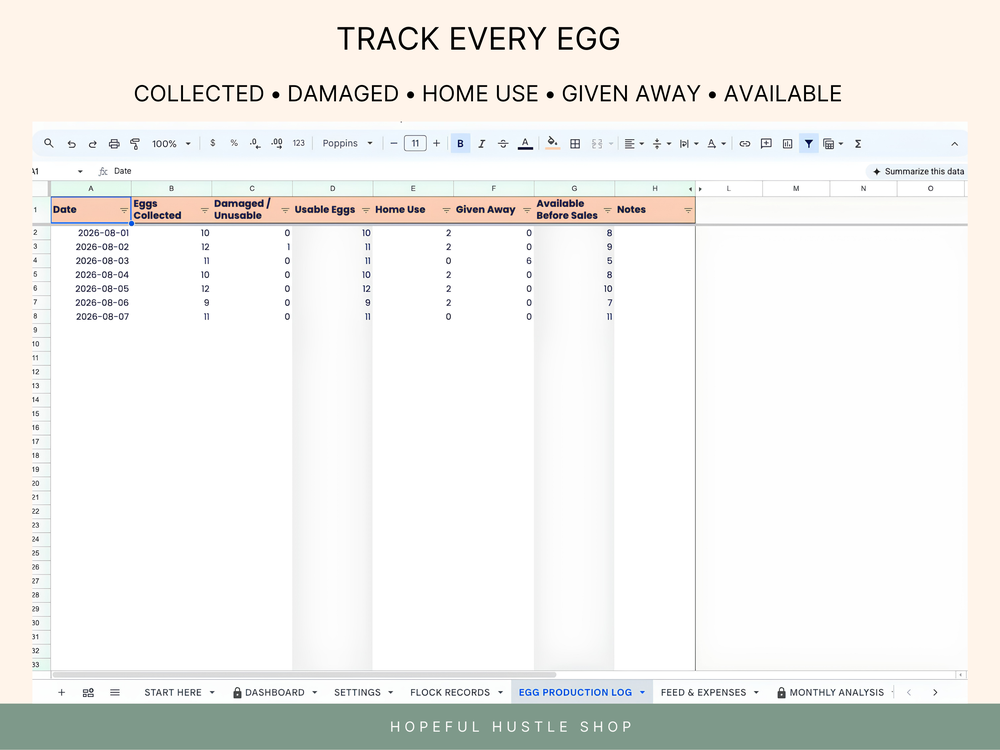
- EGG PRODUCTION LOG – daily collection numbers, split into usable eggs, damaged eggs, home use, and eggs given away.
- FEED & EXPENSES – feed purchases and everything else, entered as it happens.
- EGG SALES – who bought how many, and at what price.
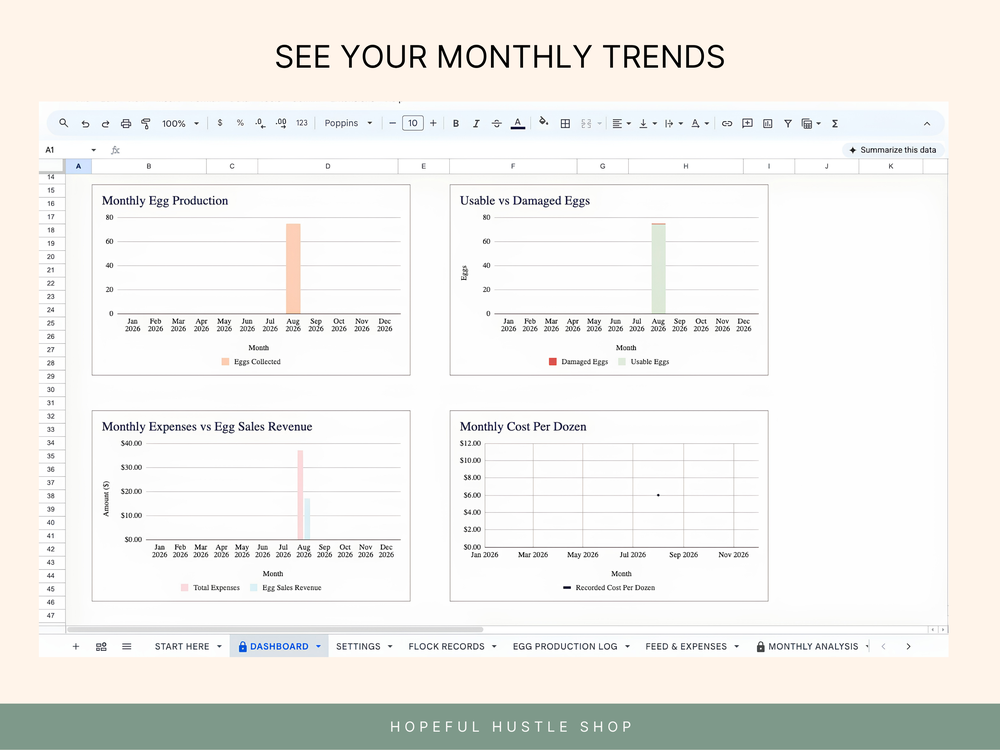
- DASHBOARD – the snapshot: eggs collected, cost per egg, cost per dozen, available inventory.
- MONTHLY ANALYSIS – 12 months of trends, so you can see a molting dip or a feed price jump coming.
How to use it so it sticks
- Set up SETTINGS first. Ten minutes now saves a mess later, because the dropdowns and the year feed every calculation.
- Add your flock before you add eggs. A log with no birds behind it is just a count.
- Log collection once a day, at the same time. Two taps on your phone beats a perfect system you abandon by week two.
- Enter expenses when you buy, not at tax time. The receipt in your pocket is the whole trick.
- Leave the grey cells alone. They are formulas. If one looks wrong, it is almost always a date or a blank row above it.
- Read MONTHLY ANALYSIS on the first of the month. That is where the pattern shows up: less light, fewer eggs, same feed bill.
What a normal flock looks like (so you know if your numbers are weird)
University of New Hampshire Extension puts it plainly: ten hens should give you about nine eggs a day once they are all laying, easing to six or seven a day after 13 months. Over that first stretch, each hen should produce about 20 dozen eggs and eat 90 to 100 pounds of feed.
Breed matters a lot. Their yearly estimates run 250 to 300 eggs for a White Leghorn, 250 to 280 for a Rhode Island Red, 200 to 280 for a Barred Rock or Buff Orpington, and 100 to 160 for a Standard Cochin. Wisconsin Extension adds the two things new owners are always surprised by: hens need 14 to 16 hours of light to keep laying, and when daylight drops in fall they molt and stop for about six weeks to regrow feathers.
Translation for your tracker: an empty week in November is not a broken spreadsheet. It is usually light and feathers.
Three things to keep next to the coop
An egg production tracker only works if the data actually reaches it. A few cheap things help more than any app:
- A rodent-proof feed container. Extension folks are direct about storing feed where rodents cannot get in, and it keeps your feed cost numbers honest too.
- A digital kitchen scale. Weighing one scoop tells you what “one scoop” really costs.
- A hanging clipboard. For the notes you scribble at the coop door before you type them in.
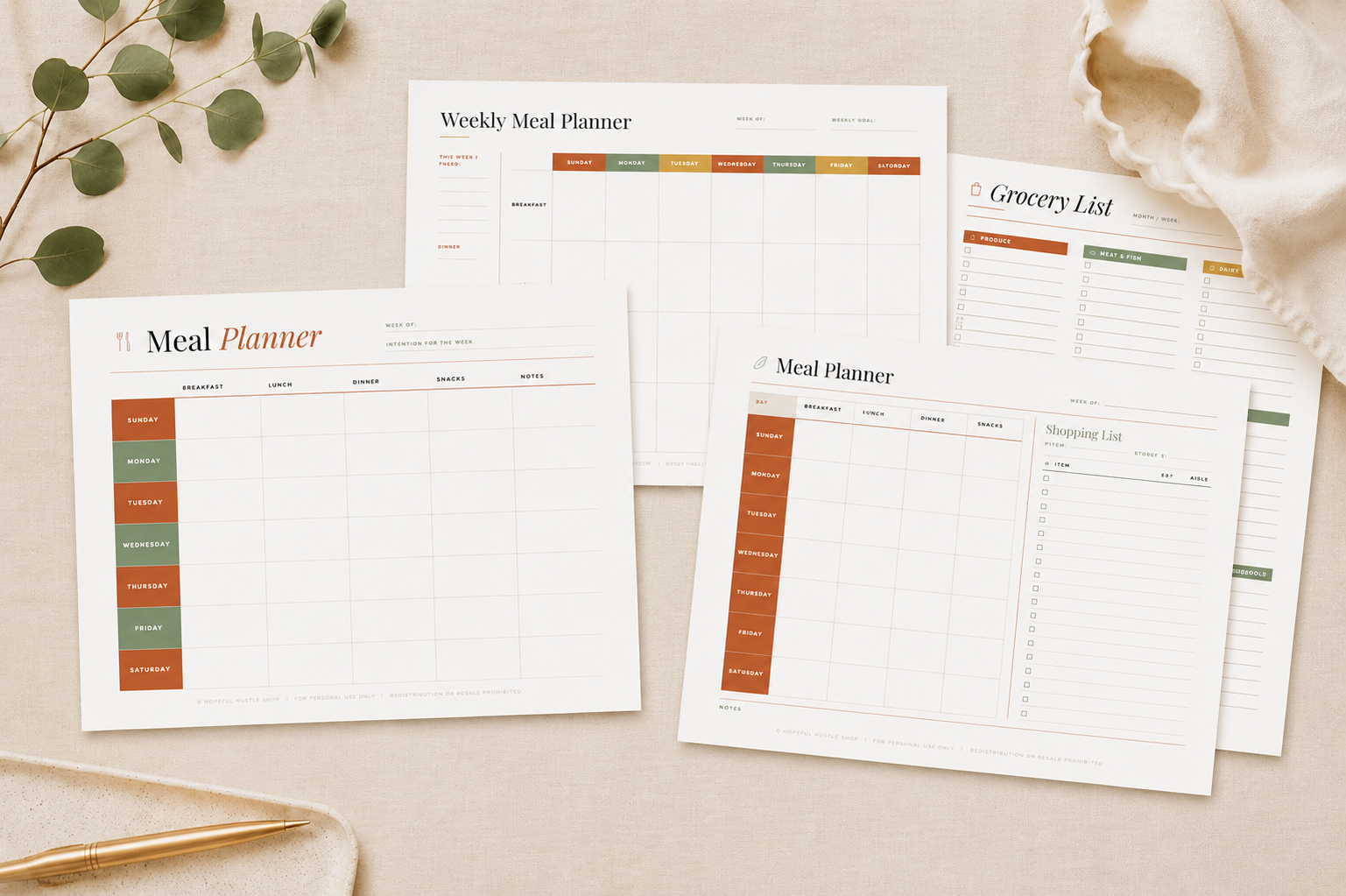
If you want the number to mean something on the grocery side too, pair it with the weekly meal plan template I use for our own shopping list. Eggs land in both.
Get your free chicken egg tracker
This one is an open download, no email needed. Click the button and Google Sheets will ask if you want to make a copy in your own Drive. Say yes, then start on the SETTINGS tab.
This printable is for personal use. If you want to share it with a friend, please send them the link to this post!
I really want to know what your cost per dozen came out to, especially if it surprised you. Tell me in the comments, and if a tab confuses you, say which one and I’ll walk you through it.
Disclosure: This post contains Amazon affiliate links. If you buy through them, I may earn a small commission at no extra cost to you.
Pin This Post

0 Comments